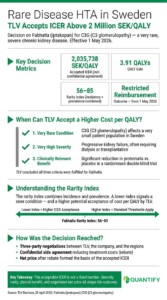
TLV’s recent decision on Fabhalta provides further evidence of how Sweden applies higher acceptable ICERs in very rare conditions.
Fabhalta was assessed for a very rare, severe chronic kidney disease population. Following three-party negotiations, TLV’s base case, including the confidential agreement, resulted in:
➡️ ICER: 2,035,738 SEK/QALY
➡️ QALY gain: 3.91
➡️ Rarity index: 56–85
➡️ Outcome: reimbursement with restriction
You can read the official decision here
And the full HTA report here
Why is this notable?
TLV can accept a higher cost per QALY for very rare conditions when three criteria are met:
1️⃣ Very rare condition
2️⃣ Very high severity
3️⃣ Clinically relevant health benefit
In this case, TLV concluded that these criteria were fulfilled.
The rarity index is especially important. It combines incidence and prevalence. Lower index, higher potential acceptance of cost per QALY.
This decision is a useful reminder that “acceptable ICER” is not a fixed number. It depends on severity, rarity, uncertainty, clinical benefit, and the negotiated net price.
In other words, the model matters but so does the context around the model.
What do you think this decision signals for future rare disease submissions in Sweden?